The same goal, different approaches
Elementor is the best-known WordPress builder, with many extensions, templates and tutorials. Bricks is newer and less widely known, but focuses on clean code and performance. Both provide visual drag-and-drop editing.
We have worked with both. Since switching to Bricks, we use it for new websites. Here is why.
What the code reveals
Builders turn page elements into HTML. Bricks usually creates one HTML element for each editor element, with your chosen class. Older Elementor layouts could wrap a heading in four or five containers. Elementor containers have reduced that number, but Bricks still produces shorter, more readable code in our projects.
Less HTML means less work for the browser. Readable code helps the next developer understand the implementation sooner.
| Criterion | Bricks | Elementor |
|---|---|---|
| Generated code | Fewer wrappers, classes you choose | More wrappers, improved by containers |
| Loops and dynamic data | Built into the core version | Loops with the Pro version |
| Extensions and templates | Smaller selection, growing steadily | Extensive selection |
| Learning | Closer to HTML and CSS | Easier for beginners |
Performance supported by the tool
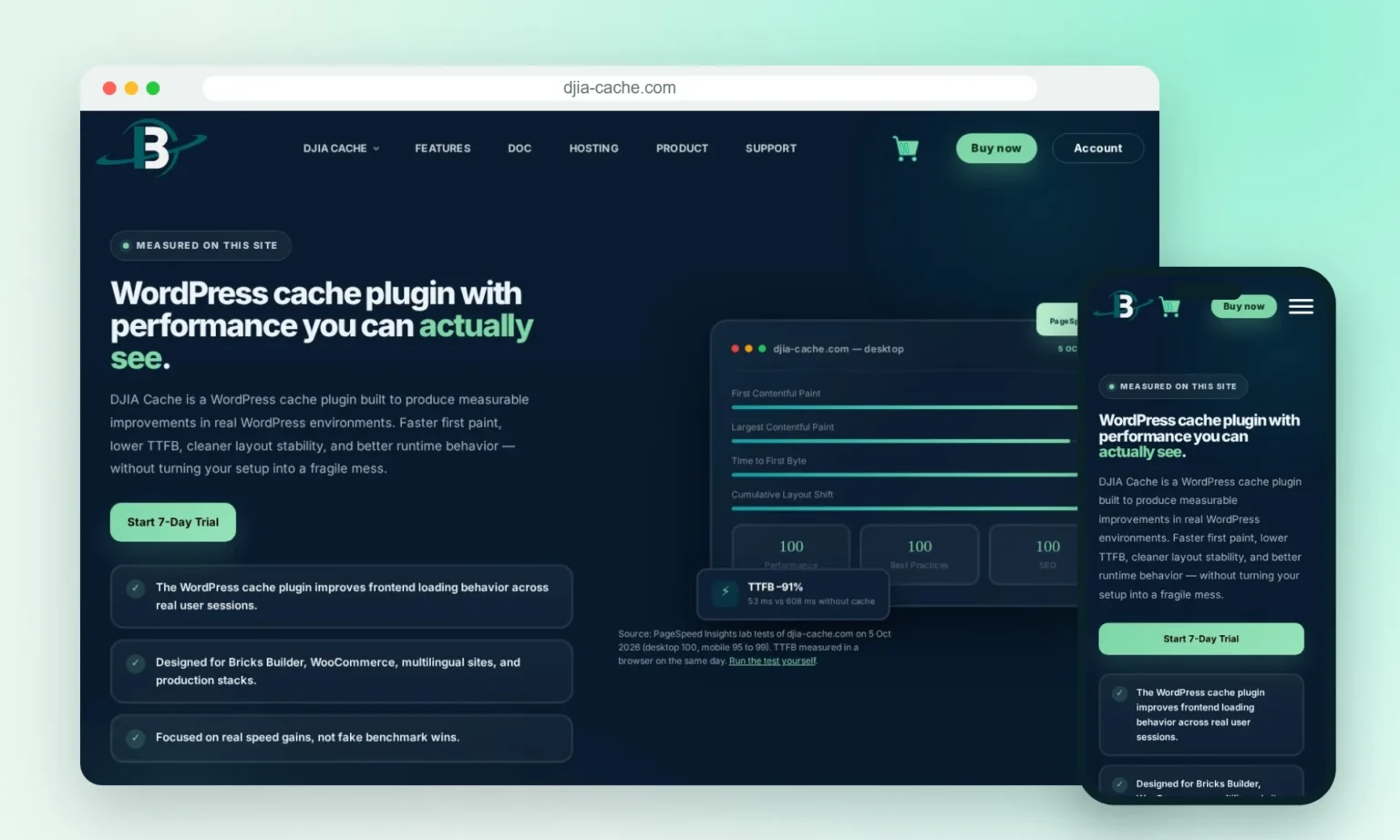
Bricks loads CSS and JavaScript only for elements present on a page. Combined with caching and prepared images, a mobile PageSpeed score of 99 becomes an achievable target. Heavier builders require disabling modules and cleaning up loaded assets. We describe our process in How to reach PageSpeed 99 on WordPress.
Classes instead of per-element settings
We write Bricks styles using global BEM classes, as in hand-written CSS. Updating a button class updates every instance, saving time and maintaining consistency.
As an owner, edit text and images directly while class-based styling keeps the design consistent.
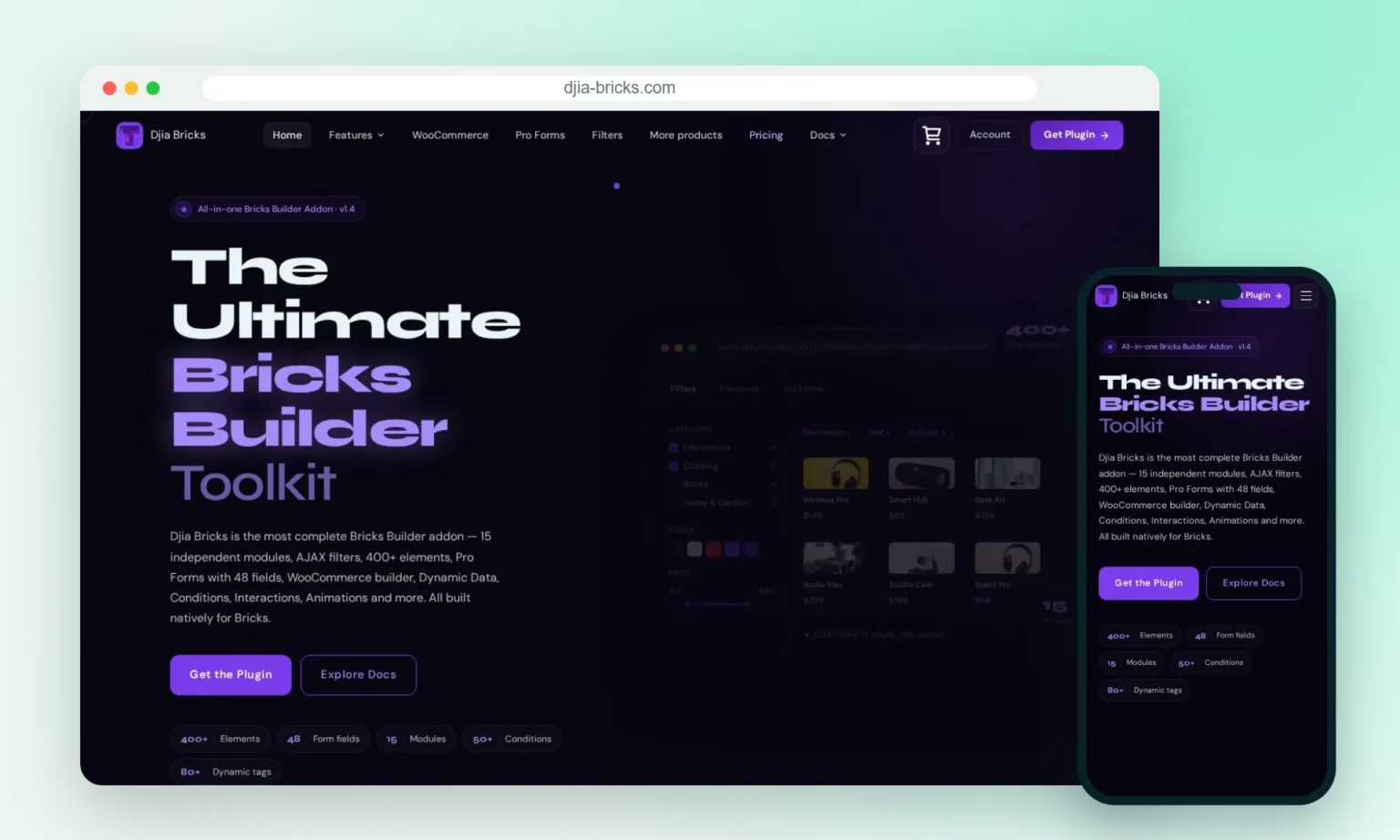
We created Djia Bricks for functions missing from Bricks: 400+ elements and 15 independent modules, loading only the code in use. More about Djia Bricks.
Migrating from Elementor
Migration starts with a Bricks design system: colours, fonts, spacing and reusable button, card and section classes. We then build pages and transfer content from the existing website.
We retain page URLs wherever possible and add 301 redirects when they change. We measure performance before and after migration, so the difference is a number rather than an impression.
When Elementor is the better choice
If your team knows Elementor well and edits content independently, switching has a cost. The same applies if you depend on an Elementor-only extension. In such cases, improving the existing website can be more sensible than rebuilding it.
The people maintaining a website should help choose its tools. We maintain our websites, which is why we choose Bricks.
Unsure which option suits your website? Send us a link, and we will tell you whether a migration is worthwhile.