01
Visual editor
Structure tree, canvas, hover states, reusable classes and per-breakpoint settings, desktop-first or mobile-first.
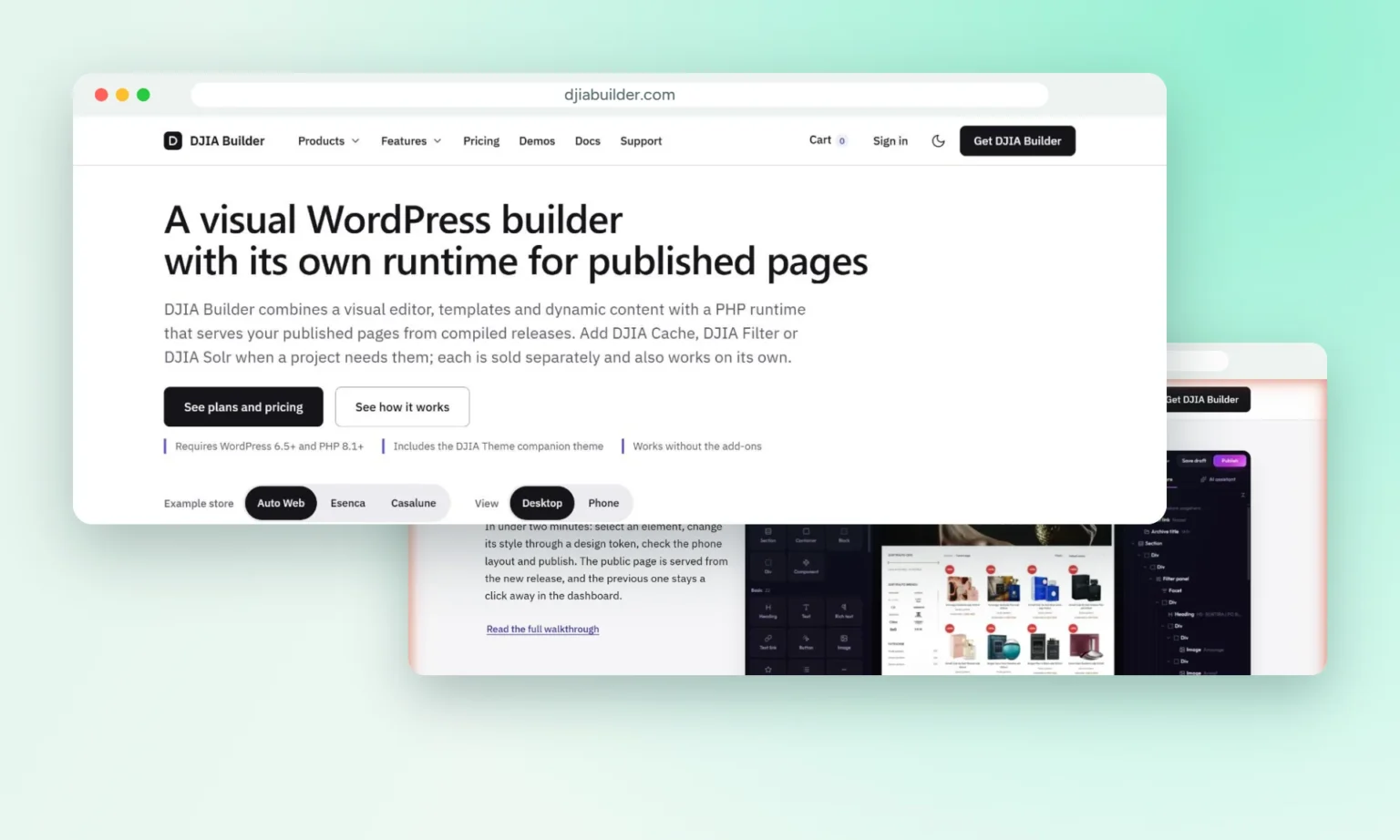
Visit the product website: djiabuilder.com
Performance measurements covering TTFB, filter response and Core Web Vitals are planned on djiabuilder.com after testing, so we do not list them here yet.
Pages that do not wait for plugins.
In fast mode, the runtime responds before plugins and theme load. Otherwise, it operates within WordPress in compatibility mode.
Login, forms, comments, orders, administration and pages without Builder templates still run through WordPress. The runtime is not a page cache; Djia Cache handles that.
Template by template, at your pace.
Prepare templates, preview them through expiring links and compare with WordPress pages. Then publish them individually.
Editor, styles, templates, data and publishing in one tool, without extra plugins for the essentials.
Structure tree, canvas, hover states, reusable classes and per-breakpoint settings, desktop-first or mobile-first.
Colour, spacing, typography, radius and shadow tokens, with global classes and components.
Up to 60 CSS animations and editor-configured interactions, without writing code.
Single pages, archives, search, 404, header, footer and popups, with display conditions and priorities.
Every publication is a validated, compiled release. The latest ten are retained, and failed builds do not change the live website.
Dynamic tags, 26 field types and Query Loop, with ACF, Meta Box and Pods fields.
Multistep forms, popups and off-canvas panels built in the same editor.
The AI assistant suggests changes that you accept or reject. It uses your API key, and MCP is disabled by default.
Store, product and checkout templates, built-in filtering and search, plus titles, schema, sitemap and redirects.
Every release follows the same process, making live deployment predictable.
Build in an editor with a structure tree, global styles and components.
Each breakpoint has independent settings, while classes are shared across pages.
Publishing creates a new release, which is validated and compiled.
If a build fails, the live website remains on its previous release.
A dedicated PHP runtime serves published pages before plugins and theme load in fast mode.
WordPress still handles functions such as login, forms and orders.
The ten latest releases are retained for rollback whenever needed.
Licensing does not affect page delivery: public pages never contact the licence server.
Builder works independently. Djia Cache, Djia Filter and Djia Solr extend it but are optional.
Prices are annual, in US dollars, excluding VAT, and currently labelled as proposals on djiabuilder.com. There is no free version; demo websites are available before purchase. Hosting, AI usage and third-party services are billed separately.
Cannot find your question? Contact us for a same-business-day response.
A WordPress plugin with a visual editor and PHP runtime serving compiled page releases. Includes DJIA Theme.
No. Builder works independently; Djia Cache, Djia Filter and Djia Solr are optional extensions.
Login, forms, comments, cart changes, orders, administration and pages without a Builder template.
Yes, template by template. Preview each one and compare it with the existing page before publishing.
Websites, editor, runtime and features continue working. Only updates and support end.
No. The assistant uses your API key and your provider bills usage directly.