Many store problems emerge during the first actual order rather than in the design: missing email, incorrect shipping or a stuck payment. We work through the same checklist before every launch.
Catalogue and search
- Product information is complete. Price, SKU, stock, shipping weight and at least one good photograph. Variations such as size and colour have their own prices and stock. Descriptions are written for customers rather than copied from supplier catalogues.
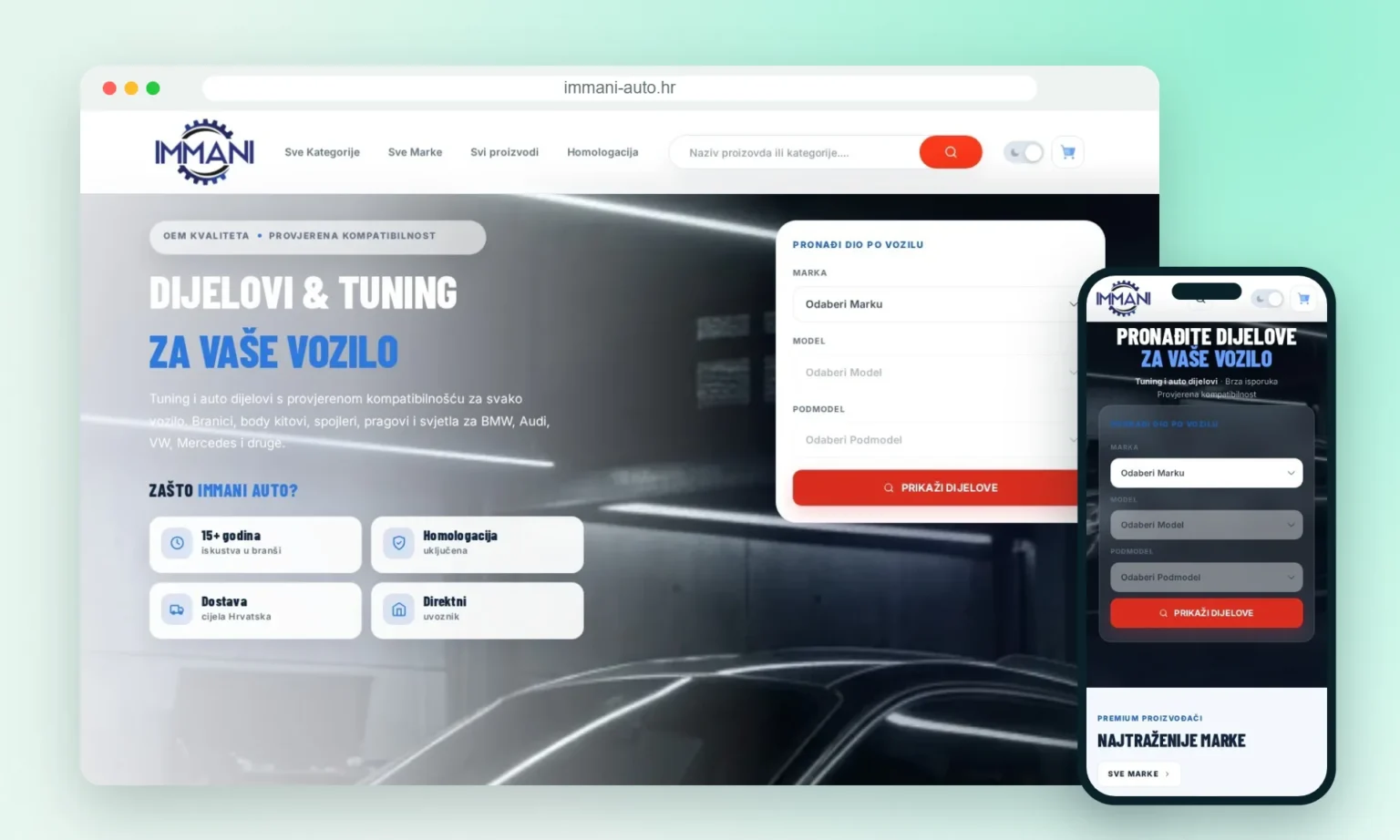
- Categories follow the way customers search. Organize categories around customer expectations rather than warehouse structure. For Immani Auto, we built searches by make, model and variant.
- Search is fast and returns relevant results. Alteo search results appear while the customer is still typing.
Cart, payment and delivery
- A test order for every payment method. Test card payments, cash on delivery and bank transfers. Check cancelled and declined payments as well as successful ones.
- Shipping zones and prices are correct. Pay particular attention to free-shipping thresholds and large or heavy parcels.
- Clear pricing before checkout. Customers should know whether VAT is included and what delivery costs before paying. Unexpected costs at the end are a common reason for abandoned carts.
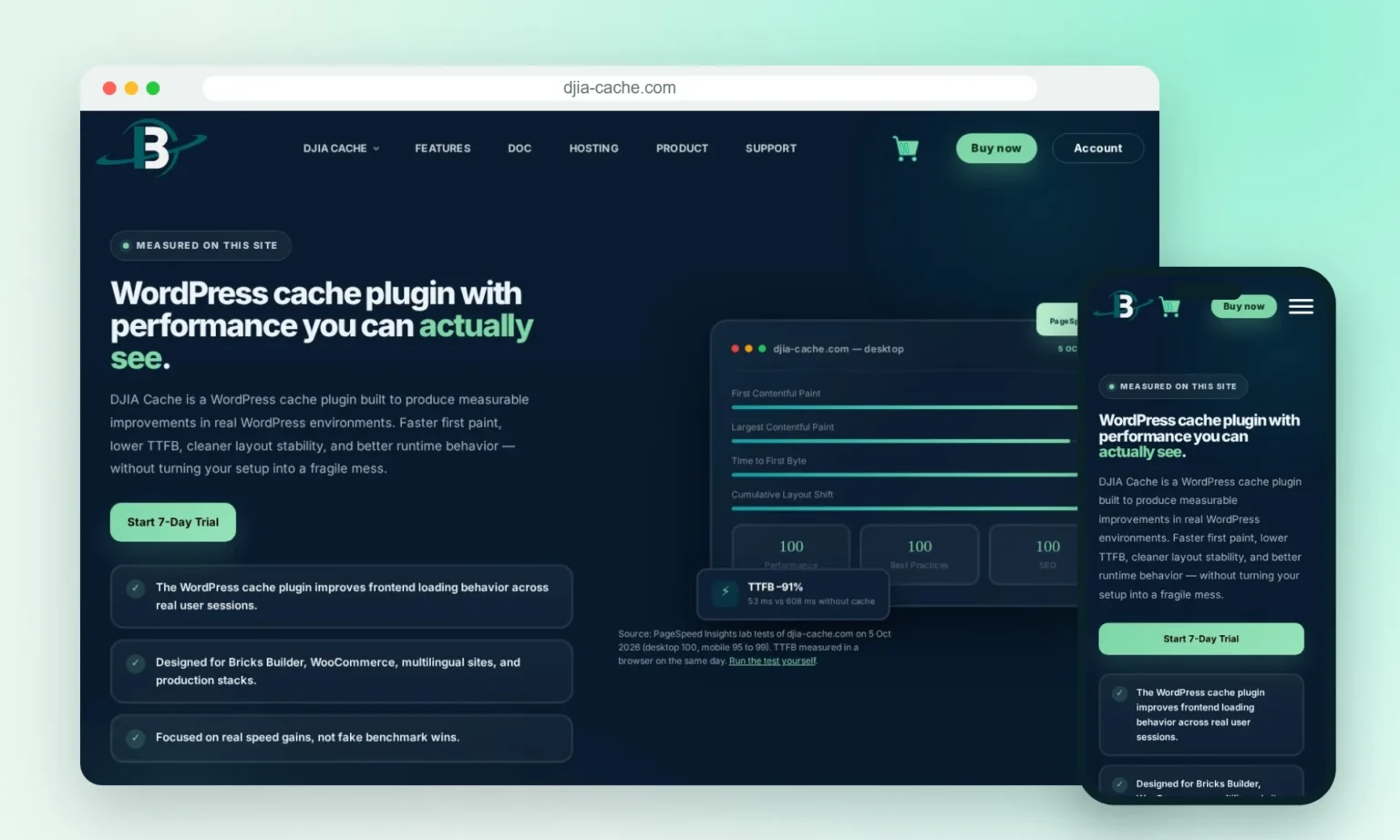
- Cart and checkout are not cached. Caching speeds up the catalogue, while cart, checkout and account pages must remain current. Djia Cache includes these rules by default.
Emails and legal pages
- Order emails reach the inbox. WooCommerce emails use SMTP rather than direct server mail to improve delivery. Each includes the store logo and contact information.
- Terms, complaints procedure and privacy policy are published. Include company details, cancellation rights and refund procedures. Obtain legal review for the countries where you sell.
- Cookies and consent. If you use analytics or advertising pixels, you need a consent banner with clear choices.
Measurement and backups
- Analytics records purchases. Track add-to-cart actions and completed orders as well as visits, to understand where customers leave.
- A backup and recovery plan are in place. Daily off-site backups with tested restoration. An untested backup is not a recovery plan.
Test purchases as a real customer
After completing the checklist, we test the full purchase journey as a real customer: on a phone, using a mobile connection and a non-admin account. Search, add to cart, change quantity, apply a coupon, pay and wait for the email. Then repeat on desktop in another browser.
A first-time visitor often finds the most usability issues. Someone outside the development team also completes a test purchase, and we record confusing steps.
We monitor orders daily during the first week after launch, when issues are easiest to identify and resolve.
Building a new store or migrating to WooCommerce? Our store development starts at $1500, and in the calculator get an estimate in two minutes.